
Our work
Community-led WASH solutions that fit the place.
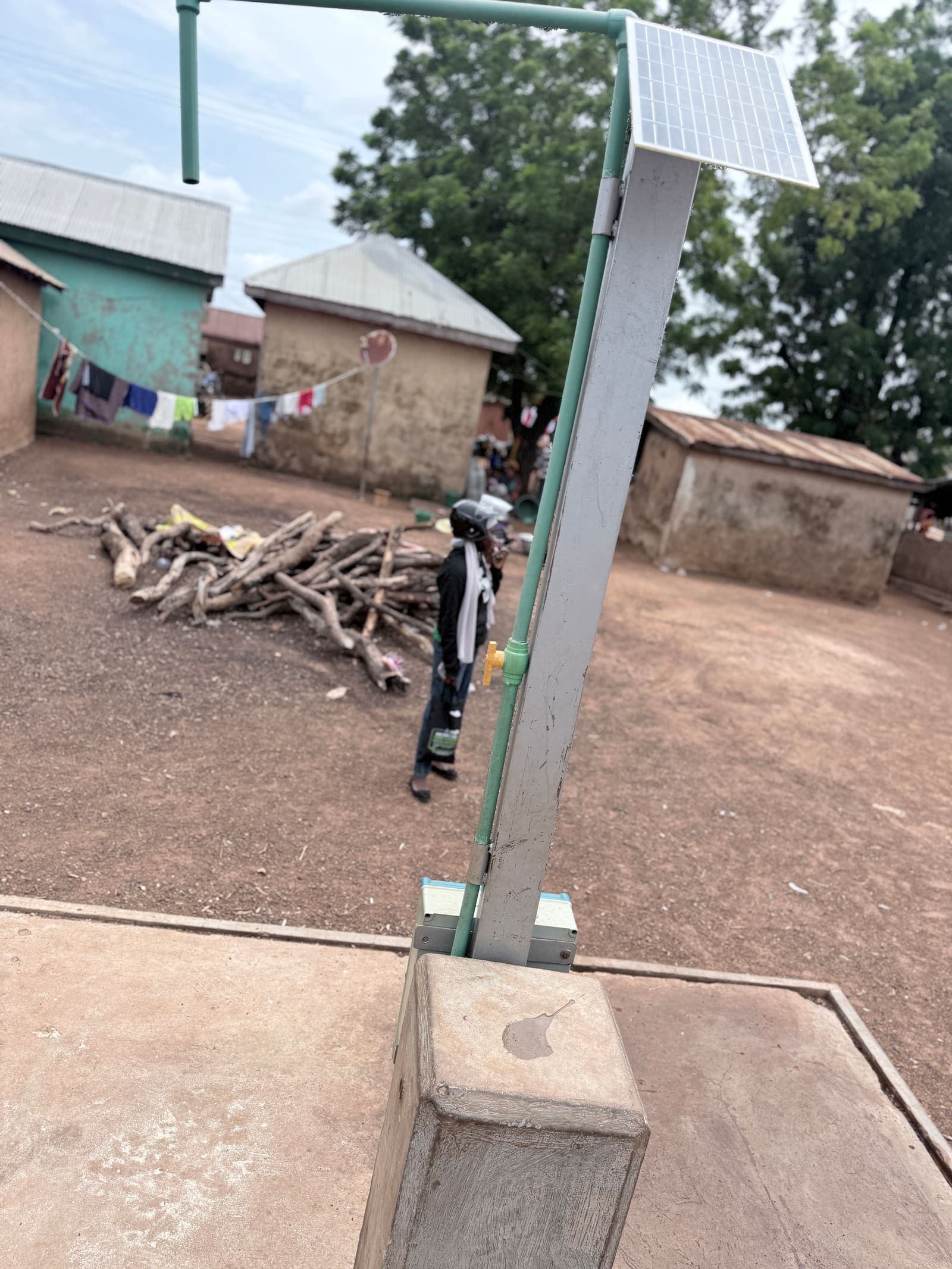
Water challenges are different from one community to another. CWAFA works with local partners to assess the need and support an appropriate solution, from water points and wells to rainwater harvesting, purification, sanitation and hygiene programmes.
Solution-agnostic
We fund what the terrain, the water table and the community call for.
There is no single water solution that works everywhere. CWAFA works with local partners to assess community needs, terrain, available water sources, population and long-term sustainability before selecting an appropriate intervention.
Easy access to clean water means education, income and health, especially for women and children. Sustainable work is locally led: our partners also facilitate sanitation and hygiene programming alongside every build.
Our WASH solutions
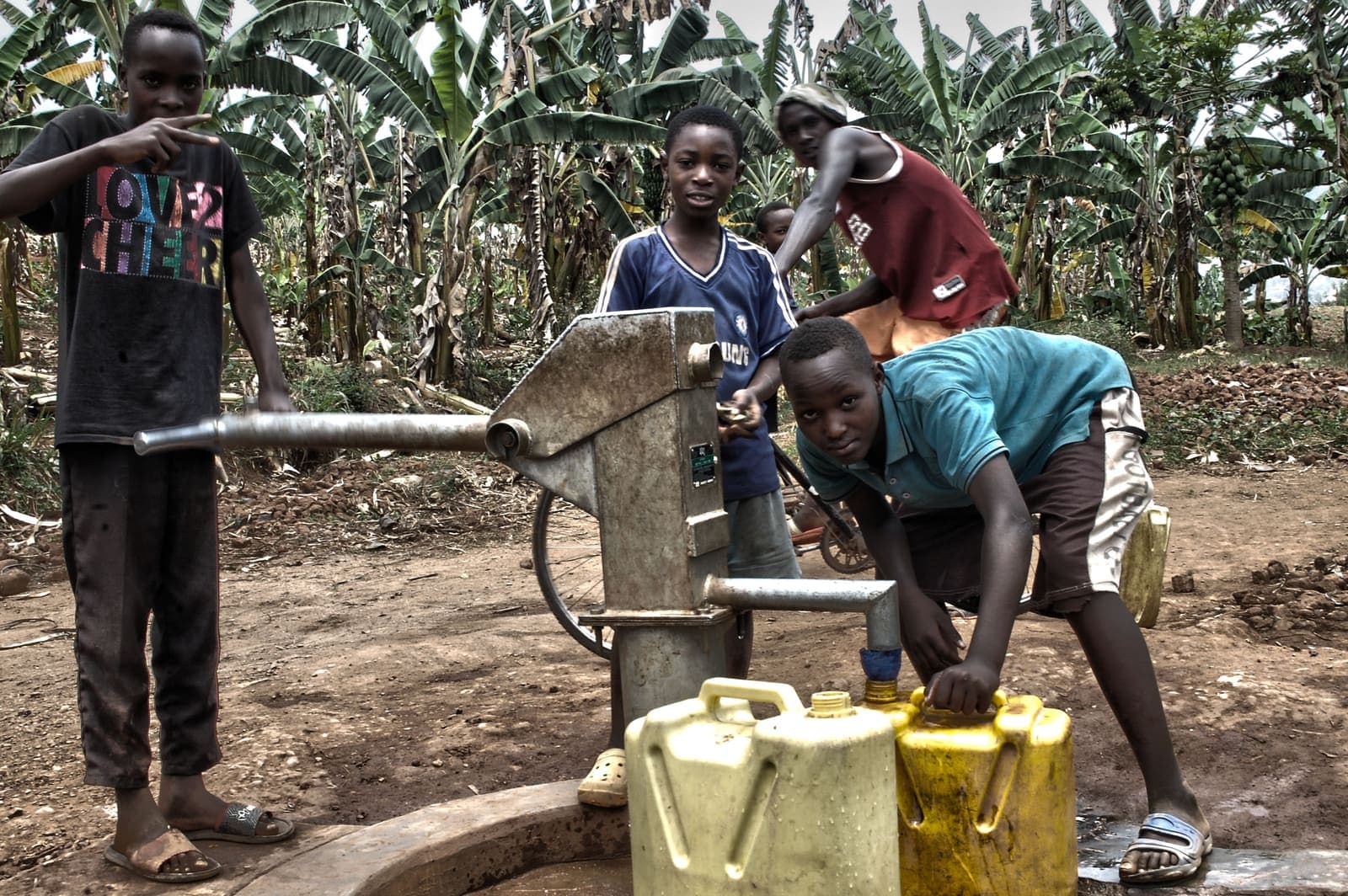
Nine ways we bring water closer to home.
Drilled Wells
Deep groundwater systems designed to provide reliable access to improved water sources where hydrogeological conditions support drilling.
Hand-Dug Wells
Community water points developed where shallow groundwater and local conditions make hand-dug wells appropriate and safe.
Rainwater Harvesting
Systems that collect and store rainwater from suitable rooftops or surfaces for appropriate household or community use.
Piped Water Systems
Networks that bring treated or protected water closer to households, schools, clinics or community tap stands.
Gravity-Fed Systems
Water distribution systems that use elevation and gravity to move water from a suitable source to users.
Water Purification
Treatment solutions that address contamination risks in existing water sources.
BioSand Filters
Household or community filtration systems designed to improve water quality where appropriate.
Spring Protection
Structures that protect suitable natural springs from contamination while improving safe collection.
BioToilets
Sanitation solutions designed for locations where conventional sewage systems may be unsuitable.
How we work
Eight in ten people without safe water live in rural areas, and that’s where we focus.
We work through carefully chosen local partner organizations to bring clean water to remote areas with the greatest need and the most vulnerable populations, following the same process end to end.
Community and site assessment
Water-source and technical assessment
Community participation and local partner engagement
Solution selection and project planning
Implementation and construction
Hygiene and sanitation education
Local management and maintenance training
Monitoring, documentation and follow-up
Sustainability
A water point is not a complete solution if it stops working months later. Every project is designed to explain how maintenance, ownership, spare parts, local leadership, monitoring and accountability will be handled long after construction ends.
Where we work
In Nigeria, CWAFA focuses on improving access to safe water, sanitation and hygiene through community-based WASH interventions, awareness, advocacy, capacity building and research.
Our footprint today
0
African countries with current CWAFA-presented WASH work.
2030 goal (target, not current impact)
1.2M+
People CWAFA aims to reach through 2,300+ funded projects by 2030.
2.1 billion people still lacked safely managed drinking water in 2024. Source: WHO/UNICEF Joint Monitoring Programme (JMP), 2025.
Where we work
Eight countries, one allegiance.
Every project is public. Hover a marker to see what CWAFA funds in that country.
- Senegal: Coastal well rehabilitation
- Guinea: Spring protection & BioSand filters
- Niger: Hand-dug wells in the Sahel
- Ghana: Piped systems & tap stands
- Nigeria: Headquarters: drilled wells & BioToilets
- Cameroon: Rainwater catchments
- Angola: Gravity-fed community systems
- South Africa: Water purification systems
Senegal
Coastal well rehabilitation
Guinea
Spring protection & BioSand filters
Niger
Hand-dug wells in the Sahel
Ghana
Piped systems & tap stands
Nigeria
Headquarters: drilled wells & BioToilets
Cameroon
Rainwater catchments
Angola
Gravity-fed community systems
South Africa
Water purification systems
Our work, answered
Questions about our WASH solutions
Depending on local conditions, CWAFA presents solutions including drilled and hand-dug wells, piped systems, rainwater harvesting, gravity-fed systems, water purification, BioSand filters, spring protection and BioToilets.